

Packing Publications
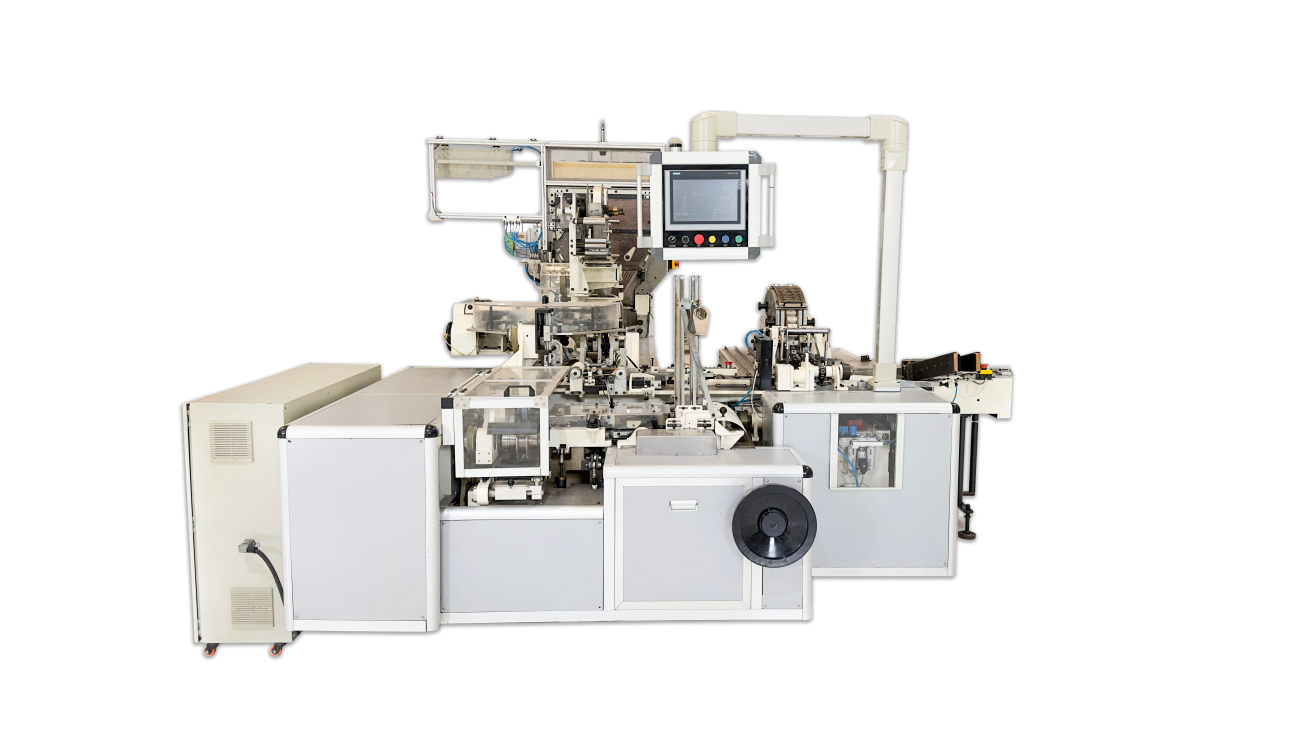
The HLP series has been a fixture in tobacco packing lines for over four decades, operating in more than 50 countries across every major cigarette-producing region. Within that range, the HLP-225 sits at the top — the highest-output, most precisely engineered hard pack machine in the HLP lineup. At 225 packs per minute, it is built for manufacturers who have moved past starter-level output and need a machine that keeps pace with a serious, multi-shift production environment.
This article breaks down what actually makes the HLP-225 different from the machines below it in the range, what its specifications mean in practice, and how it fits — or doesn’t fit — into different types of production lines.
The Double Plunger Difference
The most important engineering distinction between the HLP-225 and the entry-level HLP-180 is the plunger system. The HLP-180 is a single plunger machine — it processes one pack at a time through the forming and sealing stages. The HLP-225 uses a double plunger system, which allows two packs to be processed simultaneously through certain stages of the packing cycle. This is the mechanical reason the HLP-225 achieves 225 packs per minute while the HLP-180 reaches 180 — it is not simply running faster, it is doing more at each cycle.
The double plunger design also contributes to the HLP-225’s tighter dimensional accuracy. With two plungers operating in a controlled, synchronised sequence, the pack forming process is more consistent than a single plunger system running at equivalent speed. This shows up directly in the machine’s accuracy rating — ±0.05mm — which is meaningfully tighter than the ±0.1mm achieved by the HLP-200. For context, that is a 50% improvement in dimensional tolerance between the two machines.
Specifications Breakdown: What the Numbers Mean
225 Packs Per Minute — The Production Economics
At 225 packs per minute, an HLP-225 running a single 8-hour shift produces 108,000 packs. Across three shifts that is 324,000 packs per day, or roughly 9.7 million packs per month from one machine. For a medium-to-large tobacco manufacturer supplying regional or export markets, this output figure is commercially meaningful — enough to support a well-stocked distribution chain without creating inventory overhangs that tie up working capital.
The machine processes approximately 13,500 cigarettes per minute at peak throughput. This is the number that determines whether your upstream making capacity can feed the HLP-225 without creating a bottleneck at the packing stage. If your cigarette maker produces significantly fewer than 13,500 CPM, the HLP-225 will run below capacity — which is not necessarily a problem if your planned volume justifies the machine’s other attributes, but it is a line-balance consideration that should be factored into the investment decision.
±0.05mm Accuracy — Why This Matters on the Shelf
Dimensional accuracy in cigarette packing is not just an engineering specification — it is a brand quality indicator. Packs that vary visibly in shape, corner sharpness or tuck-flap alignment are noticed by retailers and consumers, and in premium market segments they damage brand perception. The HLP-225’s ±0.05mm tolerance across all five pack formats it supports — Round Corner, Bevel Edge, D-Type and Square — means the machine produces packs that are dimensionally consistent from the first pack of a shift to the last.
This level of accuracy also reduces downstream issues at the wrapping stage. When packs arrive at the cellophane wrapping machine with consistent dimensions, the wrap registration is cleaner and film waste is lower. Dimensional variation in packs is one of the more common upstream causes of wrapping machine stoppages that operators incorrectly diagnose as a wrapper problem.
10,000 to 12,000 Hour Maintenance Intervals
This is one of the HLP-225’s strongest operational arguments. At 10,000 to 12,000 operating hours between major maintenance intervals, a machine running two 8-hour shifts per day reaches its first major service at approximately 20 to 25 months of operation. The HLP-200, by comparison, has maintenance intervals of 8,000 to 10,000 hours — a meaningful difference when you calculate the total maintenance cost and production downtime over a five-year operational period.
For production managers planning annual maintenance budgets, longer intervals translate directly into lower labour cost, fewer spare parts consumed per year and more predictable production scheduling. The HLP-225’s extended maintenance profile is not a marketing claim — it is a consequence of the more robust double plunger mechanical system that is also responsible for its higher output and tighter accuracy.
25–35% Energy Savings
The HLP-225 consumes 25 to 35% less energy compared to machines of equivalent output class. For a machine running three shifts across a full production month, this compounds into a meaningful reduction in energy overhead per thousand packs produced. In regions where electricity costs are significant or where energy efficiency is part of a broader sustainability commitment, this specification carries genuine operational and financial weight.
Format Range: Five Cigarette Sizes, One Machine
The HLP-225 handles the full commercial range of cigarette formats — king-size, demi, slim, super slim and nano. This is the complete spectrum of sizes in current market use, which means a single HLP-225 can service every SKU in your product range without requiring a dedicated machine per format. Format changes require tooling adjustments, but HLP’s engineering approach keeps changeover time manageable within planned production windows.
The four available pack configurations — Round Corner, Bevel Edge, D-Type and Square — cover every mainstream hard pack presentation style. Whether your brand uses a traditional square-edged pack or a premium rounded-corner format, the HLP-225 accommodates it. This versatility is particularly valuable for manufacturers who produce under multiple brand identities or manufacture for contract customers with different pack specifications.
HLP-225 vs HLP-200 vs HLP-180: Choosing the Right Level
Buying the most powerful machine available is not always the correct decision. Here is how the three HLP hard pack machines compare on the metrics that most directly affect the investment decision:
- HLP-180: 180 PPM, single plunger, small to medium operations, widest global installation base
- HLP-200: 200 PPM, double plunger hopper system, ±0.1mm accuracy, 8,000–10,000hr maintenance intervals, suitable across all scales
- HLP-225: 225 PPM, double plunger, ±0.05mm accuracy, 10,000–12,000hr maintenance intervals, 25–35% energy saving, medium to large operations
The step from the HLP-180 to the HLP-200 is primarily about volume — you need more output per shift. The step from the HLP-200 to the HLP-225 is about something more specific: tighter quality, lower maintenance frequency and better energy efficiency on top of the additional throughput. If your primary driver is simply more packs per shift and your quality requirements are comfortably met by the HLP-200, the additional investment in the HLP-225 may not be justified at your current scale. If you are targeting premium markets where pack consistency is a differentiator, or if your production volume is genuinely pushing the HLP-200’s ceiling, the HLP-225 makes clear sense.
HLP vs SASIB: Hard Pack vs Soft Pack — Not a Direct Comparison
The HLP machines are hard pack machines exclusively. The SASIB 5000 and SASIB 3000 are soft pack machines. These are not competing alternatives — they produce fundamentally different pack formats for different consumer markets. The choice between HLP and SASIB is determined by your product specification and your target market’s format preference, not by a performance comparison between the machines.
Many production facilities run both format types on parallel lines — an HLP-225 for hard pack production and a SASIB machine for soft pack output — serving different market segments or brand tiers simultaneously from the same factory floor.
Where the HLP-225 Fits in the Full Packing Line
The HLP-225 is the hard pack packing stage — the point in the production chain where individual cigarettes are grouped, wrapped in inner foil and outer paper, and formed into the finished pack the consumer handles. Before it, cigarettes arrive from the making line. After it, finished packs move to the cigarette wrapping machines — typically a CP1 Regular Wrapper for cellophane application — and then to a boxing machine such as the Molins Boxer or SASIB Boxer, where packs are collected into cartons for distribution.
The HLP-225’s output rate of 225 packs per minute needs to be matched by your downstream wrapping and boxing capacity. A wrapper or boxer that cannot absorb this throughput creates a queue immediately after the packer — a bottleneck that limits your effective output to the slowest machine in the chain, regardless of what the HLP-225 is capable of running at independently.
Is the HLP-225 the Right Machine for Your Operation?
The HLP-225 is the right choice when three conditions are met: your production volume genuinely requires 200+ packs per minute of hard pack output, you are serving markets or brand segments where pack dimensional consistency is commercially important, and your downstream wrapping and boxing equipment can absorb 225 packs per minute. Meet all three and the HLP-225 is a strong, well-proven investment with a long maintenance interval and meaningful energy efficiency advantages.
If your volume sits comfortably below 200 packs per minute, the HLP-200 or HLP-180 may be more appropriate entry points. For budget-conscious operations that need proven HLP engineering at lower initial cost, used cigarette packing machines from verified suppliers offer a credible alternative to new equipment investment.
Explore the full range of cigarette packing machines to compare specifications across the complete lineup before finalising your decision.
FAQs: HLP-225 Cigarette Packing Machine
What makes the HLP-225 different from the HLP-200?
The HLP-225 achieves tighter dimensional accuracy at ±0.05mm versus the HLP-200’s ±0.1mm, has longer maintenance intervals of 10,000–12,000 hours versus 8,000–10,000, and consumes 25–35% less energy. Both use a double plunger system, but the HLP-225’s engineering refinements make it the stronger choice for manufacturers where pack quality consistency and reduced maintenance overhead are primary considerations alongside output volume.
What cigarette formats does the HLP-225 support?
The HLP-225 handles king-size, demi, slim, super slim and nano cigarette formats — covering the full commercial size range in current market use. It is also compatible with four pack configurations: Round Corner, Bevel Edge, D-Type and Square, making it suitable for a wide range of brand specifications and consumer market preferences.
How many cigarettes per minute does the HLP-225 process?
At its rated packing speed of 225 packs per minute, the HLP-225 processes approximately 13,500 cigarettes per minute assuming a standard 20-stick pack configuration. This is the figure to match against your upstream cigarette making machine’s output when planning line balance — your maker needs to produce at or near this volume to allow the HLP-225 to run at full capacity.
What downstream equipment is needed after the HLP-225?
Finished hard packs from the HLP-225 typically move to a cellophane wrapping stage using a machine such as the CP1 Regular Wrapper, then to a boxing machine — either the Molins Boxer or SASIB Boxer — where packs are assembled into cartons for distribution. Both the wrapping and boxing machines need to be sized to handle the HLP-225’s output rate of 225 packs per minute to avoid creating a downstream bottleneck.
How long are the maintenance intervals on the HLP-225?
The HLP-225 is designed for major maintenance intervals of 10,000 to 12,000 operating hours. Running two 8-hour shifts per day, this equates to roughly 20 to 25 months between major service events — a longer interval than the HLP-200’s 8,000–10,000 hours and a meaningful advantage for operations where minimising production downtime and maintenance cost per unit of output are operational priorities.
 English
  Turkish
  Russian
  Polish
  Ukrainian
  Belarusian
  Bulgarian
  Indonesian
  German